


The View from the Top: What Great CEOs Know That the Rest of Us Don't
Everyone has an opinion about how a company should be run. But there's a difference between questioning a difficult decision and being the person responsible for making it.
CEOs must navigate competing priorities, incomplete information, and consequences that may take years to become apparent. They decide which opportunities deserve investment, when to abandon strategies that once worked, and how to lead organizations through uncertainty.
What do the people who have occupied that position understand about leadership that the rest of us might be missing?
When Does Success Become an Obstacle to Growth?


One of the most dangerous moments in a company's history may be when everything appears to be going well. Successful businesses develop practices that deliver results, but over time, those same strengths can become liabilities as markets evolve.
When GINNI ROMETTY became CEO of IBM, she inherited one of the most established names in technology. Rather than protecting its existing business model, she led a sweeping transformation that repositioned the company around emerging technologies.
BILL MCDERMOTT, Chairman and CEO of ServiceNow and former CEO of SAP, has similarly made transformation central to his leadership. His experience illustrates why adopting new technology is only part of the challenge. The harder work often involves changing how an organization operates.
As the first Black woman to lead a Fortune 500 company, URSULA BURNS knows what it means to make difficult decisions under extraordinary scrutiny. During her tenure as CEO of Xerox, she oversaw a major acquisition and ultimately the company's separation into two publicly traded businesses. Her experience reveals a reality of executive leadership that is easy to overlook: every major strategic decision involves competing interests, and satisfying everyone is rarely an option.
For KATHRYN MCLAY, former CEO of Walmart International and Sam's Club, transformation has meant aligning enormous teams across complex global operations. Her experience demonstrates that even the most ambitious strategy depends on an organization's ability to execute it.
As artificial intelligence forces businesses to reconsider established models, their experiences raise an urgent question: How do you recognize when the strategies responsible for yesterday's success are no longer sufficient?
How Do You Make Decisions That Won't Pay Off for Years?
CEOs are frequently judged by quarterly results, even when their most consequential decisions may take years to bear fruit.
As CEO of PepsiCo, INDRA NOOYI confronted that tension through her Performance with Purpose strategy, connecting business growth with investments in sustainability and a changing product portfolio. Her approach reflected a belief that companies must anticipate tomorrow's needs rather than simply respond to today's demands.


DAN SCHULMAN, former CEO of PayPal and CEO of Verizon, similarly challenged assumptions about the relationship between business performance and corporate responsibility. At PayPal, he made employee financial health a priority, demonstrating how investing in a company's workforce can support broader business objectives.
Both leaders offer a perspective on a fundamental challenge of executive leadership: balancing the pressure to deliver immediate results with the responsibility to build something that lasts.
What Makes a Risk Worth Taking?


Every major business innovation begins with uncertainty. New products may fail, consumer preferences can change, and investments that seem promising may prove disastrous.
For CEOs, the challenge isn't avoiding risk. It's deciding which risks are worth taking.
ARI EMANUEL, CEO of TKO, built his career challenging established conventions in entertainment, helping transform talent representation and expand into sports and media through ambitious deals. His career demonstrates how recognizing opportunities for consolidation and expansion can reshape an entire industry.
GREG CREED, former CEO of Yum! Brands and Taco Bell, approached risk through a different lens: challenging conventional marketing wisdom within an established business. His emphasis on making brands distinctive and relevant demonstrates why even successful companies must be willing to question their assumptions about consumers.
ALLISON ELLSWORTH, co-founder of poppi, identified an opening in the beverage industry, transforming a homemade concept into a brand ultimately acquired by PepsiCo. Without the resources or infrastructure of an established beverage giant, she bet that consumers were ready for a different kind of soda, demonstrating how an unconventional idea can become a formidable business.
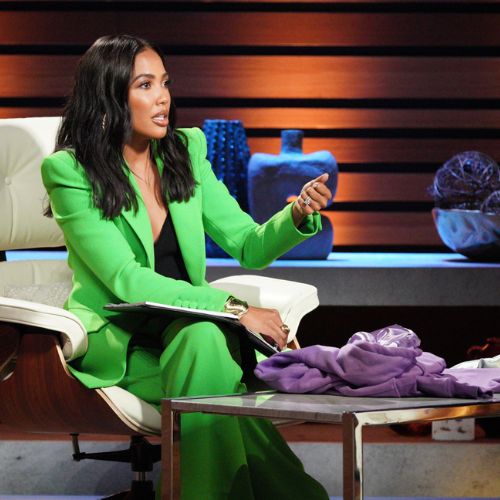
EMMA GREDE, co-founder and CEO of Good American, recognized an opportunity in fashion's historically limited approach to inclusive sizing. By building a brand around consumers whose needs had long been underserved, she demonstrated how challenging an industry's assumptions can create an entirely new avenue for growth.
Their experiences demonstrate that calculated risk-taking is less about embracing uncertainty for its own sake than recognizing opportunities others have overlooked.
How Do You Stay Relevant When the World Changes?


Market leadership is no guarantee of continued relevance. Companies can command enormous audiences, enjoy decades of brand recognition, and still find themselves struggling to connect with the next generation of consumers. Few industries illustrate that challenge more vividly than media.
BEN SHERWOOD, CEO of The Daily Beast and former president of Disney ABC Television Group, has navigated the evolution of traditional and digital media from both established institutions and entrepreneurial ventures. His career offers lessons in recognizing when familiar business models need to evolve.
Former CBS News and Stations President and CEO WENDY MCMAHON has confronted the challenges of leading major news organizations amid changing audience habits and intense scrutiny. Her experience underscores how difficult it can be to balance innovation with the expectations attached to established brands.
As Chief Content Officer of Condé Nast and longtime leader of Vogue, ANNA WINTOUR has spent decades shaping the relationship between fashion, media, and consumer influence. Her career illustrates a different dimension of relevance: understanding cultural shifts early enough to help define them rather than simply responding to them.
Together, these leaders demonstrate that relevance cannot be taken for granted. It must be continually earned as the people an organization serves evolve.
What Changes When You're the One Making the Decision?
The decisions that define a company rarely come with obvious answers. They require leaders to weigh immediate pressures against long-term opportunities, recognize when established practices have become liabilities, and act before the outcome is certain.
What makes the experiences of these executives valuable isn't that they've discovered a universal formula for success. It's that they've confronted these challenges firsthand, with the responsibility for getting the decisions right.
Continue the Conversation
More ideas like this:




.svg)
Most Recent Posts:
- Blog Home
- The Harry Walker Agency at 80: The Industry We Helped Build. The Future We Still Shape.
- What We Owe One Another: Citizenship in a Divided America
- What We Owe One Another
- What Makes People Change Their Minds? The Science of Persuasion
- The Leadership Skills That Matter Now
- America at 300: Still Young, Still Becoming Through Science
- Why Are Gas Prices Rising? Inside the New Energy Economy
- AI Implementation: How Can Businesses Successfully Put AI to Work?
- Don Walker: From a Kitchen Table to Collective Effervescence: 80 Years of HWA and the Enduring Power of Human Connection
- What High Performers Know About Achievement, Reinvention and Getting Better
- The Attention Wars: Why Attention Is the World's Most Valuable Resource
- The Most American Idea Isn't Freedom. It's Reinvention.
- Are We Living Through the Age of Expertise? 15 AI Keynote Speakers Redefining What it Means to be an Expert
- What Does It Mean to Live a Good Life? The New Science of Living Well
- America at 300: The Future of American Power and Global Leadership
- 5 Motivational Quotes from Some of the World's Most Successful People
- The Economic Outlook: What Should Business Leaders Be Watching?
- When Everyone Knows the Name: The Power of the Marquee
- The Great Reskilling: How Do We Prepare Workers for Jobs That Don’t Exist Yet?
