
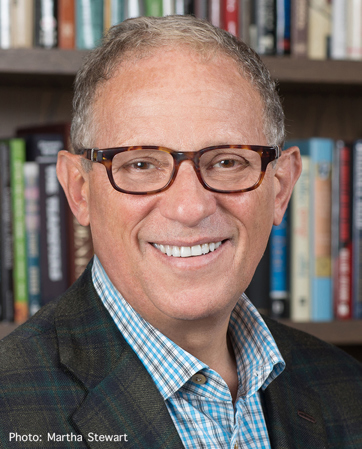
Fred Hochberg
- Longest-serving Chairman in Export-Import Bank history
- High-ranking business leader in the Obama Administration
- Member of the Small Business Administration Landing Team for the Obama Transition (2008)
- Commissioner, Port Authority of New York and New Jersey (2008-2009)


- Globalization Institute at the Federal Reserve Bank of Dallas
- Bloomberg US-Africa Business Forum
- Federation of Indian Chambers of Commerce and Industry
- Jeddah Economic Forum
- Out on the Street
- The Economist's Pride and Prejudice Conference
- Washington Ideas Forum
- Aspen Ideas Festival
- Milken Global Conference
- Clinton Global Initiative
"Fred was fantastic. He was very engaging with our attendees prior to our fire side chat, extremely articulate during the discussion, and his expertise was very evident. He also has a good sense of humor that made the discussion more entertaining. I would highly recommend him as a speaker to any business organization or company."
-Security Industry Association


Navigating the New Trade Landscape
For decades, the United States has worked to lower global trade barriers, enabling American businesses to aggressively enter new markets backed by pro-globalization policy tailwinds. That era has ended—the 2016 election made that crystal clear. In the rest of the world, the 21st century has been defined by ever-increasing levels of government support for businesses’ pursuit of trade opportunities. Meanwhile, America has been more hands-off. Our narrow focus on free trade agreements on one hand and sanctions on the other has left our companies, large and small, at a real disadvantage. As the longest-serving Chairman of the Export-Import Bank of the United States, Fred Hochberg can relay lessons from working in and traveling to more than 45 countries on behalf of American exporters and workers, laying out some surprising truths about global trade. Much of what the public and even members of Congress think they know about trade is wrong. And because many misdiagnose America’s trade problems, they also offer the wrong prescriptions. Fred can help audiences understand how to navigate today’s shifting trade landscape, advising on how to succeed overseas, utilize existing U.S. government resources, and win big deals. He will also challenge audiences to consider innovative solutions to forge a new bipartisan consensus on trade, including the importance of correctly framing the issue (it’s about exports, not trade) and recommending ways of engaging policymakers (employees should know when their paycheck comes from export sales). It’s these new approaches that will steer leaders toward ideas that actually level the playing field for American companies and workers.
Seizing on America’s Competitive Advantage
“Made in the USA” is one of our strongest brands and sells products worldwide. And America still does make a lot of things the world wants to buy It’s an assertion that you won’t hear from many politicians these days, but it is rooted in simple facts: we remain the world’s second largest exporter—while also attracting high levels of investment from overseas. Fred Hochberg will discuss the industries that will allow America to retain and improve these advantageous positions in the global economy, and educate audiences about the impact they have for tens of thousands of supply chain businesses, many of which are small businesses. He will also share anecdotes and lessons learned during his eight years working with top executives, financing some of the biggest deals in the aviation, oil and gas, space, infrastructure, agribusiness, and other sectors—including his work with innovative small businesses that have grown into leading global companies. He can also convey the ways your industry can frame its own competitive advantage with policymakers here at home and with customers overseas.
China and India: The Market Threats and Opportunities
As the longest-serving Chairman of the Export-Import Bank, Fred Hochberg traveled to China and India more than any other countries during his eight years in the role. He’ll share his insights on the competitive threat both countries’ businesses pose, the opportunities they represent for American companies and the keys to doing business—and dealing with state and national governments—in both countries.
The Near-Death Experience and How an Enterprise Recovers
Fred Hochberg will detail the two times in his long career in business, academia and government where the enterprises he led were driven to the brink. At Lillian Vernon, the family business he helped lead for 20 years, the near-collapse occurred as demand outpaced the company’s capacity to fulfill orders in the early 1980s. The company recovered, continued its growth and went public in 1987. At EXIM, the injury was inflicted by Congress, which shut down the agency’s ability to do any new deals for five months in 2015, only to reauthorize the Bank’s charter later that year. He will relay the lessons learned from both experiences, including the need for clear external and internal communication, and the ways these inevitable tests can strengthen businesses and institutions.