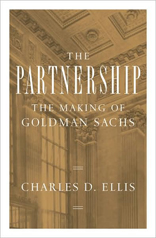



The Partnership: The Making of Goldman Sachs
Based on 30 years as a strategy consultant to leaders on four continents and over 300 in-person interviews with senior executives, the definitive biography of the world’s most effective securities company, full of colorful people and first-hand stories, explains how a nearly bankrupted “outsider” firm stumbled badly, largely recovered, and continues to be the market leader.
Success Secrets of the Great Professional Firms
Just as Olympian athletes differ, the best firms in law, counseling, finance, healthcare, investing and auditing differ because their disciplines differ. McKinsey, Cravath, Mayo Clinic, etc. all agree on what it takes to excel. Based on 40 years of study and over 300 interviews. the seven success secrets are identified, explained and illuminated with insights and interesting stories.
Falling Short: The Looming Problem with 401(k)s and How to Solve It
Realities of practice are falling way short of the theory or promise of 401(k)s and, given what we’ve known all along about the mistakes individual investors make with their investments, we should have anticipated trouble. Now, we know, and the trouble is BIG. in this speech, Charles Ellis discusses how to fix these problems.
The median 401(k) participant has in his 401(k) or IRA only $120,000.
Participants make mistakes all along the way, not participating, not “matching the match,” not escalating contributions (ideally to 12% or more) as pay increases, borrowing, taking money out to cover expenses between jobs, buying high, selling low, leaving money in stable value, retiring too soon, withdrawing too much each year in retirement, and not anticipating late in life costs for healthcare and assisted living. Net result: $120k for 22 years.
Meanwhile Social Security is quietly and slowly decreasing benefits.
Net result: Tens of millions of American workers – unless we make changes – will have too little for the comfortable retirements they are expecting.
We can solve the 401(k) problem – if we act soon – with two changes:
1. All 401(k) plans adopt the proven “Best Practice” so all decisions are automatic – unless the participant opts out.
2. Social Security educates all beneficiaries on the major benefits of working longer. If, instead of claiming at 62, we work to 70, benefits go up….76%! And by not taking money out, continuing to add contributions, and compounding investments 401(k) payouts increase even more!
Net result: tens of millions of retirees will be shifted from “too little” to “enough” for an enjoyable secure retirement.
Success in Investing: Challenges for Investment Managers
Is investment management a profession or a business? Obviously both, the business has been so strong that it has dominated the profession. And what a business it is! High pay, fascinating work, continuous learning, and always, challenging. Investment management has attracted large numbers of brilliant, hard-working, well-educated, and intensively competitive people – all over the world. Ironically, they are so skillful that they have made it terribly hard for any active manager to beat the competition by enough to earn the high fees being charged for investment “products,” each client is expected to compose into an optimal investment program to meet that client’s long term objectives, given its unique needs, resources, and time horizon. So, clients are moving – slowly, but in increasing volume – to indexing and ETFs and “target data” funds to continue earning client’s loyalty, mangers need to excel at client communication and “value discovery,” the joint determination of a realistic investment program to achieve success in a way that matches each client’s unique situation and objectives – rebalancing profession and business by putting the client first.