
Michael Strain
- Director, Economic Policy Studies and Paul F. Oreffice Senior Fellow in Political Economy, American Enterprise Institute
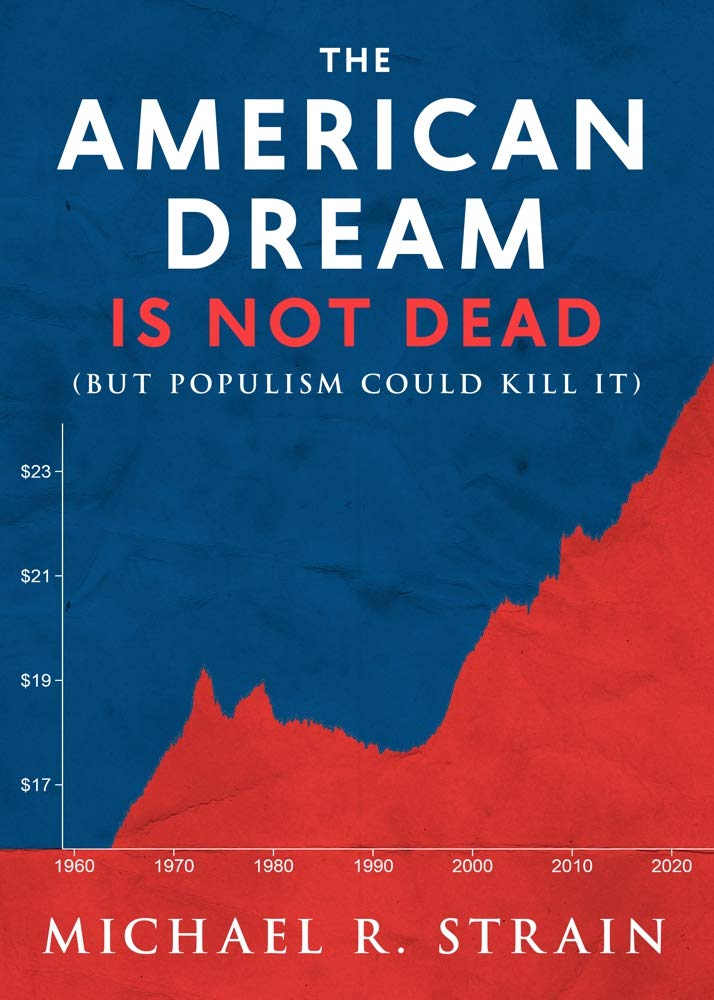
- Author, The American Dream Is Not Dead: (But Populism Could Kill It)
- Professor of Practice, Georgetown University’s McCourt School of Public Policy
- Contributing Columnist, Financial Times



Economic Outlook: What Comes Next for the U.S. Economy?
The U.S. economy is navigating a new and unusually complex landscape. Persistent inflation, changing interest-rate expectations, tariffs and trade policy, federal spending and deficits, shifting labor-market dynamics, geopolitical uncertainty, and the rapid adoption of artificial intelligence are all reshaping the outlook for businesses and consumers.
Leading economist MICHAEL R. STRAIN cuts through the noise to explain what the latest economic signals really mean—and what leaders should be watching next. How strong is the U.S. economy beneath the headlines? Is inflation becoming a longer-term challenge? Where are interest rates headed? How will tariffs and changing trade relationships affect prices, investment and growth? Is the labor market truly weakening, or simply adjusting to a new economic environment? And could AI-driven productivity gains meaningfully change America's long-term growth trajectory?
Drawing on the latest data and policy developments, Strain provides a clear, accessible assessment of the forces shaping the economy and the implications for businesses, workers, markets and policymakers in the months and years ahead.
The Economic Effects of Artificial Intelligence
Artificial intelligence is no longer a technology of the future. Businesses are investing billions of dollars in it today, workers are incorporating it into their jobs, and companies are beginning to rethink how work gets done. The important question is no longer whether AI will transform the economy—but how, how quickly, and who will benefit.
Leading economist MICHAEL R. STRAIN separates the economic reality from the hype. Will AI replace workers, or make them more productive? Which jobs and industries are most likely to change? What could AI mean for wages, productivity and economic growth? Will businesses see meaningful returns on today's enormous AI investments? And could a sustained increase in productivity help the U.S. overcome some of its biggest long-term economic challenges?
Strain explores what history, economic research and the evidence emerging from today's workplace tell us about the AI economy. Rather than eliminating the need for people, AI is more likely to change what people do, increase the value of some skills while disrupting others, and reshape how businesses compete. For leaders, understanding those changes—and preparing their organizations and workforce for them—may prove just as important as the technology itself.
Populism and the New Economics of Washington
For decades, Republicans and Democrats disagreed about plenty—but there was broad consensus around many of the basic principles that shaped American economic policy. Today, much of that consensus has disappeared.
MICHAEL R. STRAIN, one of Washington’s leading economists and policy thinkers, examines how the rise of populism is reshaping economic policy on both the right and the left—and what that means for businesses, workers and the future of the U.S. economy.
Why have tariffs, protectionism and industrial policy returned to the center of the economic debate? What happened to the traditional Republican commitment to free markets and free trade? Why are both parties increasingly willing to use government intervention to address economic grievances? And how are concerns about affordability, immigration, manufacturing, the federal debt and the economic security of working Americans changing what is politically possible in Washington?
Drawing on his experience at the intersection of economics and public policy, Strain takes audiences inside the economic debates playing out in Washington and separates political rhetoric from economic reality. He explores where populism is responding to legitimate concerns, where its proposed solutions may make those problems worse, and what a more durable pro-growth economic agenda could look like.