
Margaret Heffernan
- International Media Executive, Entrepreneur & Author of A Bigger Prize, Wilful Blindness & Women on Top
- Contributor to the Huffington Post, BNET, Fast Company, Real Business, MORE


- Society of HR Managers
- Federal Bank
- Strategic HRne
- Virtual Staff College
"Best session at the conference. Absolutely brilliant presenter….Dynamic speaker with amazing data"
-Society of HR Managers"Margaret added significantly to the resonance and impact of the conference on our participants. She did a splendid job of mixing ‘presentation’ with Q&A. This took courage on her part since she hadn’t worked with the FED in the past and had no clue what kind of questions might surface! Her thoughtful responses caused participants to think more broadly about the challenges of ‘willful blindness’. It felt like she would have added value to the outcomes of the conference regardless of topic. I’m sure we will invite her to speak at future conferences. "
-Federal Bank"Thank you so much for speaking at EFx. I hope you took on board our feedback that you're a gifted communicator with a provocative and thoughtful message. One of the best! "
-Mike Wilsher, Executive Foundation"Thank you for sharing the gift of your research and your talent for communication with our audience at Mt. Washington. When we first chatted last January, I had high hopes for the uniqueness you’d bring to the conference stage. It turned out to be an even bigger prize than those expectations. "
-Bud Bernstein, Strategic HRne


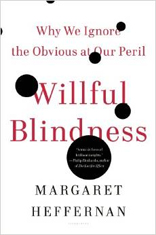
20/20 Vision: The Antidote to Willful Blindness
Big mistakes, the failure to spot trends early, difficulty innovating: even the smartest companies miss things. But why? Your workforce should be the greatest information-gathering network—so why does it so often happen that all those smart people miss things? How can teams and companies be run to maximize the information, knowledge and insight all those people carry in their heads? What are the impediments to insight—and how can we do better?
One Company: The Art and Science of Building Collaborative Cultures
After years of making companies more efficient, the most pressing question now is: how do I get all of this talent, experience and knowhow to collaborate? We know that innovation demands the collision of disciplines and knowledge—but how can that happen when most information is trapped in silos and fiefdoms? What are the mechanisms that keep potential trapped—and what can companies do to liberate it? Although most work is done in teams, many team members don’t know why or how to extract value from their collaboration. What are the trends and changes around the world that mark a new model for leadership and collaboration?
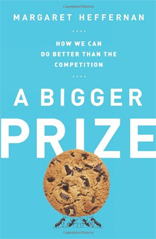
A Bigger Prize: A New Measure of Competition and Collaboration
Margaret Heffernan suggests that existing business models for competition have unintended consequences. They often keep the best from rising to the top, crushing creativity, disengaging us from responsibility, undermining trust, and enhancing waste. In A Bigger Prize, her eye-opening book on competition, she offers a new construct for creative collaboration and innovation. Based on conversations with scientists, musicians, athletes, entrepreneurs and executives, Margaret demonstrates a new ethos of cooperation within and outside organizations. It is a process grounded in generosity and the future, and it is a process that leads to measurably better bottom line results for your business and HR practices. It is also the focus of her conversation with us at the retreat. Margaret suggests that this new way of looking at competition and collaboration will be some of the hardest work we do, but that it is indeed work that will help us share a bigger prize.
Does Competition Work?
Solo cyclists can peddle fast - but if you get them to race against one another, they race faster. That early research finding has permeated management, instilling the belief that a competitive culture will build excellence. But what's the evidence that it works? What are the unforeseen consequences? And why are some of the most creative and productive companies in the world doing all they can to eradicate internal contests? When does competition work for you—and when might it prove corrosive?
What is Diversity For, and What Does It Mean?
Diversity and inclusion have been management buzz words for decades. So why has progress proved so slow? Many companies have made great progress in improving numbers around diversity but have found little has changed. Was diversity just a fad, or is there a second chapter? What are the relevant reasons to pursue a diversity agenda and what is the nature, challenge and importance of inclusion?