
"Katica is instantly credible, deeply engaging, and commands the room with ease."
-Web Summit"Katica made AI both urgent and accessible, tailored, timely, and unforgettable."
-AI Summit"Katica is sharp, adaptable, and effortlessly connects with any audience, no matter the setting."
-Thomson Reuters Foundation"Katica has spoken at several Techonomy and Worth events in recent years about a range of topics including artificial intelligence. Katica has a fantastic stage presence and has the ability to explore complex topics with clarity and nuance. She is an engaging, dynamic speaker and a pleasure to work with. We hope to have her back again soon!"
-TechonomyThe Exit Economy™
Reclaim the $3.1 trillion economic opportunity lost to workforce undervaluation. Redesign your enterprise systems for sustainable, broad-based growth.
You're Not Broken, The System Is
Individual challenges are actually structural design flaws. Reengineer your systems to unleash human capital and drive AI-era profitability.
The Barbell Economy™
Navigate the AI and automation forces hollowing out the middle class. Master the operational levers to secure enterprise growth.
What You Feel Is Real
Validate workplace friction with economic data. Discover how mispriced human capital and rapid automation impact enterprise solvency.
Reengineering The Future of Work
Reengineer your talent architecture for the AI era. Discover a new operational model maximizing productivity and enterprise resilience.

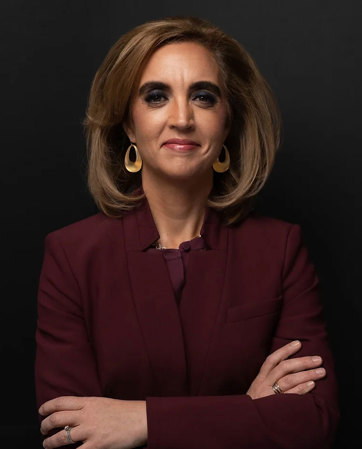
Katica Roy is a Tech CEO, award-winning economist, data scientist, and former Global 500 executive whose work sits at the intersection of labor force economics, artificial intelligence, and national fiscal policy. She is the architect of The Exit Economy™, a leading economic theory in the AI era focusing on the untapped potential of human talent. Drawing on more than one billion data points from 6,250 companies across 32 countries, Katica identifies where economic design fails, leaving latent capacity in the labor market. Her work provides a clear, practical blueprint for leaders to redesign systems, recover suppressed revenue, and unlock measurable financial performance.
As the founder and CEO of Pipeline, Katica translates her economic frameworks into enterprise technology. Under her leadership, Pipeline was named one of TIME Magazine's Best Inventions and recognized with numerous Fast Company awards.
Katica’s economic frameworks have been trusted with real economic consequence by G7 and G20 leaders. She was previously a presidential advisor helping to oversee $34 billion in federal contracting set-asides, and has advised the President of the United States, Congress, and the U.S. Small Business Administration on workforce policy. Internationally, she helped Canada launch its federal Pay Equity Commission and advised the G20 and B20 on post-pandemic economic recovery strategies. Her research is utilized by the International Finance Corporation (IFC)—a member of the World Bank Group—for its global corporate governance initiatives, and has been cited in multiple U.S. congressional publications.
Generating over 2.9 billion media impressions, Katica currently writes a twice-monthly column for Fortune. Her insights have reshaped the national conversation on economic systems, rapid automation, and solvency across platforms like Good Morning America, Bloomberg, The New York Times, and the World Economic Forum. A highly sought-after global keynote speaker, she has spoken on the top 100 stages globally, including featured appearances at CES, SXSW, and Web Summit, as well as corporate events for Microsoft, Google, J.P. Morgan, and P&G. Beyond delivering keynotes, she is a trusted interlocutor for global leaders, having conducted interviews with former President Joe Biden, former Vice President Kamala Harris, former Secretary Pete Buttigieg, and several U.S. Senators. She serves on the Fast Company Impact Council, Bloomberg's New Economy Forum as a founding member, and The Aspen Institute's Tech Accountability Coalition.
Katica’s passion for her work is deeply personal. Nearly sixty years to the day after her father and sisters climbed the stairs of Air Force One to freedom, thanks to the humanitarian intervention of President Eisenhower, she received a letter from President Barack Obama thanking her for standing up and speaking out. That letter is a marker of what her work has meant at the highest levels of American public life, and a reflection of how seriously policymakers, institutions, and leaders have taken her economic frameworks.