

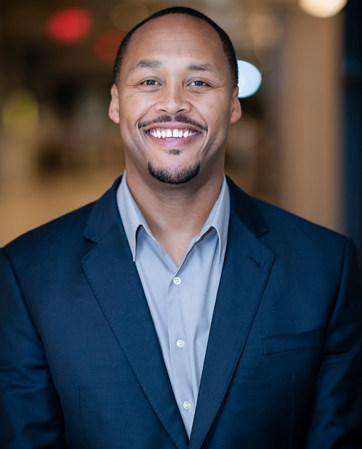
Jarrett Harper
EXCLUSIVE
ADD TO MY SPEAKER LIST
- Justice Reform & Foster Youth Advocate
- Lived Experience Fellow, Silver Linings Mentoring
- Founder, Better Days Nonprofit
- Storyteller, Project Witness
- Parole Justice That Works
- Human Rights Watch
- Big Brothers, and Big Sisters
- Princeton
- University of Southern California
- Jordan Park
- YouTube
- Verizon
- Muhlenberg College
"This young man, who had suffered so much and been through so much trauma, was dedicated to transforming himself and to finding hope."
-Ty Stiklorius, Talent Manager, John Legend"Jarret was an exceptional speaker and ALSO a stellar discussion facilitator/participant."
-Muhlenberg College


The Power of One Decision
In this compelling keynote, criminal justice reformer and youth advocate JARRETT HARPER shares how a single moment can change the trajectory of a life.
Jarrett spent the first 16 years of his life in multiple abusive foster homes as a troubled, at-risk foster youth that experienced unimaginable trauma by an abuser who befriended him as a little boy. To protect himself and his younger brother, Jarrett was forced to take the life of his abuser. At the age of just 17-years-old, Jarrett received a life sentence without the possibility of parole. Despite having no chance for release from prison, Jarrett found forgiveness and hope. After years of deep introspection and reflection upon his life, he made it his mission to transform his own life by helping others change theirs. Jarrett ultimately found his life calling as a passionate advocate working for equality, positive change in the foster system, ending life sentences for juvenile offenders, and creating more resources for rehabilitation for those returning to society.
In his life-changing talks, Jarrett explores the consequences of decisions made in crisis and the redemptive choices that can follow. With a voice shaped by personal transformation, Jarrett challenges audiences to reflect on how even one decision, rooted in courage or compassion, can spark lasting change in individuals and systems alike.
Key Takeaways:
- How one decision can shift the course of a life.
- Understanding agency within constraint: empowering people to make values-driven decisions in impossible situations.
- The importance of providing community members with alternatives, support, and informed guidance before critical turning points occur.
Retaining Hope
Hope is not a luxury. It is a lifeline.
In this inspiring and deeply moving presentation, JARRETT HARPER reveals how he held onto hope through 20 years of incarceration, despite being sentenced to life without parole as a teenager. He shares the tools he used to retain his spirit at his darkest moments, from reading Viktor Frankl’s Man’s Search for Meaning to finding ways to care for others.
He speaks to the transformative power of hope in the face of trauma and injustice, offering practical wisdom for anyone facing adversity. Jarrett’s story is a testament to human resilience, and a call to action for building more compassionate institutions.
Key Takeaways:
- Hope is a form of resistance in environments designed to break the human spirit.
- The mental, emotional, and spiritual practices that sustained Jarrett while incarceration.
- Why cultivating hope is essential for rehabilitation, reintegration, and community health.
- Actionable ways individuals and institutions can act as beacons of hope.
Mentors are Changemakers
Mentorship saved JARRETT HARPER’s life, and now he’s paying it forward.
While setting up a National Mentoring Summit with Silver Lining Mentoring as their inaugural Lived Experience Follow, Jarrett realized that mentors were some of the most impactful people in his life. In his time with Silver Lining, Jarrett has since raised $1M, sparked an ongoing partnership with the Boston Celtics, and established a speakers bureau to empower mentees to publicly advocate for themselves.
In this powerful talk, Jarrett reflects on the critical role mentors played in his personal growth during two decades in prison and beyond, sharing he now mentors foster youth entangled in the criminal legal system through both direct action and fundraising. He explores how mentors can shape futures, disrupt cycles of harm, and create the next generation of changemakers in their communities.
Key Takeaways:
- The transformative power of mentorship in carceral settings and beyond.
- How mentoring relationships promote accountability, purpose, and growth for both mentor and mentee.
- Ways to build formal and informal mentoring programs that truly increase opportunities.
Testimony: Finding Home in Faith
When he left prison, the only place JARRETT HARPER could go was Beit T’Shuvah, a Jewish halfway house. There, Harper was welcomed with open arms. Reflecting on his Christian upbringing and the long history of ties between faith leaders and civil rights, Jarrett realized the connections between faith, redemption, and a better world.
In this poignant keynote, Jarrett explores the spiritual journey that carried him from despair to purpose, and how belief in something greater than himself helped him rediscover forgiveness, redemption, and peace. Audiences will leave with renewed inspiration and an understanding of how faith can provide both sanctuary and strength.
Key Takeaways:
- How faith provided a framework for healing, forgiveness, and transformation.
- Why faith-based communities play a key role in restorative justice and reentry support.
- Encouragement for faith institutions to act as sanctuaries of healing and platforms for systemic change.
The Role of Community in Rehabilitation
Rehabilitation doesn’t happen in isolation. It requires community.
Drawing from his two decades of lived experience inside the prison system, JARRETT HARPER explores how peer-led programs, outside advocates, and intentional community support can foster real change for incarcerated individuals. This keynote offers a hopeful, evidence-backed look at how collective action and care can reduce recidivism and restore dignity.
Key Takeaways:
- Rehabilitation must extend beyond institution walls—it’s a communal responsibility.
- The success of peer-led, community-informed rehabilitative programming inside prison.
- Why isolation and punishment don’t work, and why belonging and connection do.
- Practical strategies for communities to build supportive networks for returning citizens.
The Foster Care to Prison Pipeline: Youth & Mass Incarceration
As a survivor of both the foster care system and mass incarceration, JARRETT HARPER offers a rare and urgent perspective on the dangerous pipeline that entraps thousands of vulnerable youth.
A longtime advocate for legislative reform, Jarret is one of the best-equipped voices to speak on this topic both from his professional expertise and personal experiences. Jarrett’s insights into corrections, education, and social justice can even set the stage for a day of thought-provoking panels, discussions, and poster presentations designed to foster solidarity and inspire action.
This eye-opening presentation dissects systemic failures and offers forward-thinking solutions to prevent children from being funneled from foster care into prisons. Jarrett’s firsthand experience makes this an unforgettable call for policy reform and human dignity.
Key Takeaways:
- An inside look at how the foster care system acts as a feeder to the criminal legal system.
- Root causes of youth incarceration, including systemic racism, poverty, and trauma.
- How early intervention, educational equity, and mental health care can disrupt this pipeline.
- Policy and community recommendations for reducing incarceration among foster youth.
Fundraising for Youth Advocacy
In this dynamic talk, nonprofit founder JARRETT HARPER shares strategies and stories behind fundraising for youth impacted by the foster care and criminal justice systems. Drawing on his wildly successful fundraising work with Better Days, Jarrett provides insights on his lived experiences while building mission-driven campaigns, forming authentic donor relationships, and creating programs that drive measurable change for at-risk youth.
Harper’s fundraising experience has touched a number of youth advocacy organizations.
Key Takeaways:
- Sharing lessons learned from launching and scaling a mission-driven nonprofit.
- Aligning storytelling, data, and urgency in fundraising campaigns.
- The importance of centering impacted voices in advocacy and philanthropy work.
INTERACTIVE VR/AR EXPERIENCE: Response & Repair: Education, Corrections, and Solidarity
JARRETT HARPER invites audiences into a groundbreaking immersive experience that merges personal narrative, cutting-edge VR/AR technology, and urgent systemic inquiry. This interactive session centers on the stark realities of incarceration in the United States—where approximately 1.9M individuals are currently behind bars (BJS, 2024)—and explores how education and empathy can serve as powerful tools for response and repair.
Through virtual simulations based on real-world scenarios, participants gain firsthand insight into the lives of youth impacted by the foster care-to-prison pipeline and the failures of our current systems. The session also shines a light on racial and socioeconomic disparities: children of color, those from lower-income backgrounds, and youth with mental health concerns are far more likely to be criminalized than supported, while their white and wealthier peers are often ushered into higher education opportunities (Office of Juvenile Justice and Delinquency Prevention, 2022; Holland, 2019).
This experience challenges participants to reflect on their role in disrupting carceral systems and cultivating equity. Through empathy-building, discussion, and action planning, the session urges participants to consider what responsibilities our society holds in shaping a more democratic, civically engaged, and just community.
Key Takeaways:
- Embodied Empathy: How immersive VR/AR can foster a deeper emotional understanding of incarceration, youth trauma, and systemic injustice.
- Racial & Economic Disparities: Why children of color and those from under-resourced communities face disproportionate incarceration—and how educational privilege plays a role in these outcomes.
- Systems Thinking: How incarceration is not only a legal issue but a community, cultural, and educational issue requiring interdisciplinary responses.
- Local Institutional Responsibility: What roles do colleges and local organizations play in disrupting the foster care-to-prison pipeline in the Lehigh Valley and beyond?
- Tools for Action: Concrete steps educators, students, and community leaders can take to become allies in response and repair through restorative justice, policy advocacy, and mentoring.
- Relationship Building: How solidarity, not charity, builds the foundation for long-term change and equitable opportunity for all youth.