
 My Speaker List
Find Your Speaker:
Speakers By Topic
Speakers By Type
Speakers By Topic

Speakers By Type

"{{ovation.quote}}"
-{{ovation.company}}

Today's Political Landscape: Insights from Four Decades of Leadership (Virtual Program)
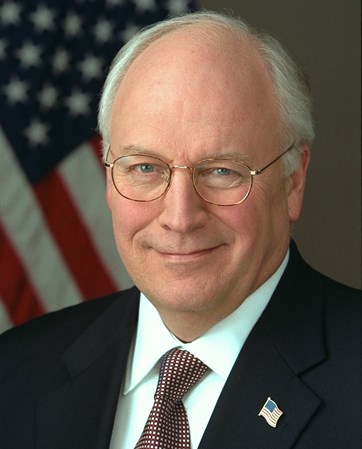
With nearly four decades of experience, from his tenure as the White House Chief of Staff under President Ford through his leadership as the 46th Vice President of the United States, few Americans alive today can match the breadth and depth of Vice President DICK CHENEY's experience and service. As a statesman, policymaker, businessman, and politician, Cheney’s insight, experience, and knowledge are unparalleled. A leader in our country at the highest levels, Vice President Cheney offers audiences a sweeping picture and unprecedented insider’s view of some of the most debated issues during his tenure, as well as insight on the current political landscape.
Heart: An American Medical Odyssey (Virtual Program)
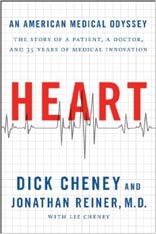
Vice President DICK CHENEY has lived a public life in government service and business, and while the world knew about his cardiac problems, he did not discuss them much until recently. In the 35 years since his first of five heart attacks in 1978, Vice President Cheney has personally benefited from revolutionary changes in cardiac care, including a heart transplant in 2012. Now, Vice President Cheney shares his story and how remarkable advancements in modern medicine, well-funded research, and dedicated medical teams saved his life. In his newest book Heart, co-authored with his long-term cardiologist, Vice President Cheney chronicles the amazing advancements in cardiac care in the last four decades interwoven with his dramatic personal health story. The book serves as a poignant and personal case-study of how advancements in science – in any area of disease – give hope to millions struggling around the world.
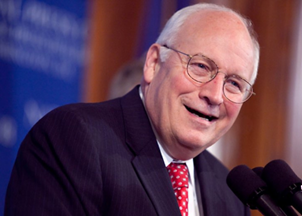
In compelling virtual programs, Vice President Dick Cheney shares his unparalleled political and private sector expertise and receives rave reviews
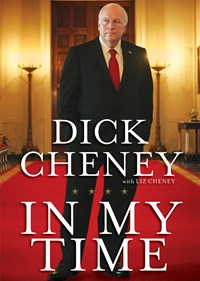
A political power player for decades, Vice President DICK CHENEY brings his considerable experience and understanding to bear on the key issues facing citizens and corporations today. With unparalleled expertise in both the public and private sectors, Cheney he has been sought-out to speak to groups such as the Texas Oil and Gas Association, the Associated Equipment Distributors, NICE Systems, Sinclair Oil, the Carient Heart & Vascular Foundation, among many others. Having served at the highest levels of the U.S. Government and private sector – as Vice President, U.S. Secretary of Defense, and CEO of one of the world’s largest oil field service company, Halliburton – Cheney has participated in the events that have shaped our nation for over four decades. The #1 New York Times bestselling author of In My Time, Heart, and more continues to shape the future of the energy industry in profound ways as a board member of WellAware.
Heralded for his compelling keynotes and moderated conversations at virtual events, Cheney has received consistent rave reviews no matter the format, such as:
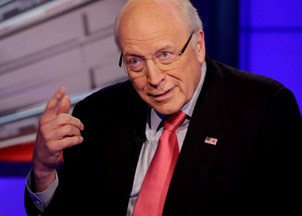
Vice President Dick Cheney is an in-demand voice on the energy industry
Former Vice President (2001-09) DICK CHENEY is a power player of the energy industry with unparalleled private and public sector experience. A go-to voice, he has been sought-out to speak everywhere from the Texas Oil and Gas Association to the Argus Americas Crude Summit to the 2019 International Petrochemical Conference. Heralded for his substantive, prescient, analysis, he earns rave reviews at each event such as: “Vice President Cheney was a huge success... I did not receive a single negative response. He received two standing ovations. People found him genuine, honest, engaging, and very interesting. We expected him to speak for 20 minutes and takes questions for 30 minutes. He spoke for 20 minutes and took questions for 75 minutes." (Sinclair Oil)
Having served at the highest levels of the U.S. Government and private sector - as Vice President, U.S. Secretary of Defense, and CEO of one of the world’s largest oil field service company, Halliburton - Cheney has participated in many of the events that have shaped our nation for over four decades. He continues to shape the future of the energy industry in profound ways as a board member of WellAware, a leading industrial Internet of Things Company that offers data analytics solutions for the oilfield industry. Since Cheney joined the board, WellAware has made headlines for its continued growth and more recently, for its cutting-edge collaboration with Amazon web services.
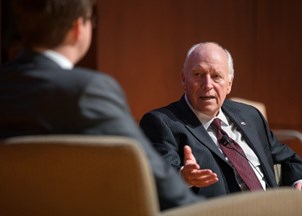
Dick Cheney is a leading voice on foreign affairs
Having served at the highest levels of the U.S. Government and private sector, DICK CHENEY has participated in many of the events that have helped shape our nation for over four decades. Sought-out for his extensive business, security and policy insight, Cheney currently serves on the board of WellAware, a leading industrial Internet of Things Company that offers data analytics solutions for the oilfield industry. Since Cheney has joined the board, WellAware has made headlines for its continued growth and more recently, for its cutting-edge collaboration with Amazon web services. Heralded for his unvarnished assessment of today's political landscape and its implications for businesses across industries, Cheney recently engaged in a Q&A at a major trade association's Board Meeting, and was sought-out to deliver a keynote at the Universal Peace Federation's World Summit where his insights on negotiations with North Korea made headlines. At engagements he regularly receives rave reviews such as: "I was in awe of Mr. Cheney. So generous with his time and so gracious to our guests. The conversation in the office was that there may not have been a single better or more appropriate person on the planet than the VP. So far we have not thought of anyone that could have provided what Mr. Cheney provided." (Casimir Capital L.P.)

Across four decades of public life, Dick Cheney has served at the highest levels of government during some of the most critical days in modern American history.
In the post-Watergate administration of Gerald Ford, the president turned to 34-year-old Dick Cheney to lead the White House staff in the work of restoring the nation’s confidence and waging the president’s 1976 campaign.
After leaving the White House, Cheney returned to his home state of Wyoming, where he was elected in 1978 as the state’s sole member of the House of Representatives. Re-elected to office five times, Cheney served in several leadership positions and was chosen by his colleagues as the minority whip, the number two position in the House Republican leadership.
Early in Cheney’s sixth term, in 1989, he was nominated by President George Bush to serve as Secretary of Defense, and was confirmed unanimously by the United States Senate. In his four years at the Pentagon, Cheney led American forces to victory in Operation Just Cause in Panama, and Operation Desert Storm in the Persian Gulf. In 1991, he was awarded the Presidential Medal of Freedom.
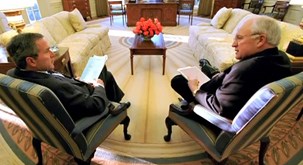
Through most of the 1990s, Cheney worked in the private sector as chief executive officer of the Halliburton Company in Dallas, Texas. In 2000, George W. Bush asked Cheney to become his running mate and in August 2000, Cheney became the Republican vice presidential nominee. President Bush and Vice President Cheney were inaugurated for the first of two terms on January 20, 2001.
In the eight eventful years of the Bush presidency, the vice president was best known for his involvement in national security matters following the terrorist attacks of September 11, 2001. Cheney has been recognized by many as the most powerful and consequential vice president in American history, and worked side by side with George W. Bush to keep our homeland safe and protect Americans from terrorist attacks for seven and a half years following 9/11.
President Bush and Vice President Cheney left office in January 2009. Shortly thereafter, Vice President Cheney believes President Obama began to dismantle the security policies that had kept the nation safe. Vice President Cheney feels that President Obama's policy decisions have led to a reversal of the gains America made in the war on terror, in countries like Iraq and Afghanistan, and a weakening of America across the globe.
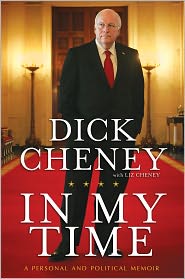
Vice President Cheney was born on January 30, 1941 in Lincoln, Nebraska. He and his wife, Lynne V. Cheney, live in Wyoming and have two daughters and seven grandchildren. Vice President Cheney’s memoir, In My Time, was published in 2011. His latest book, Heart: An American Medical Odyssey, was released in October 2013.
 {{formatCrumb(term)}}